Test Automation

Cloud Fundamentals: Cloud Architecture for AI Applications

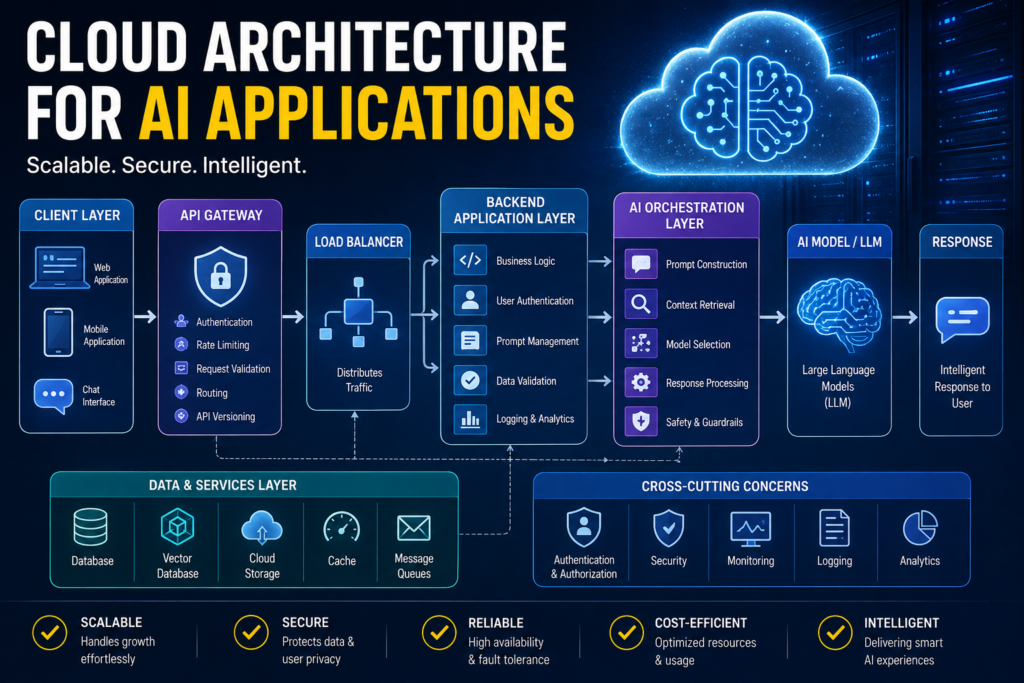
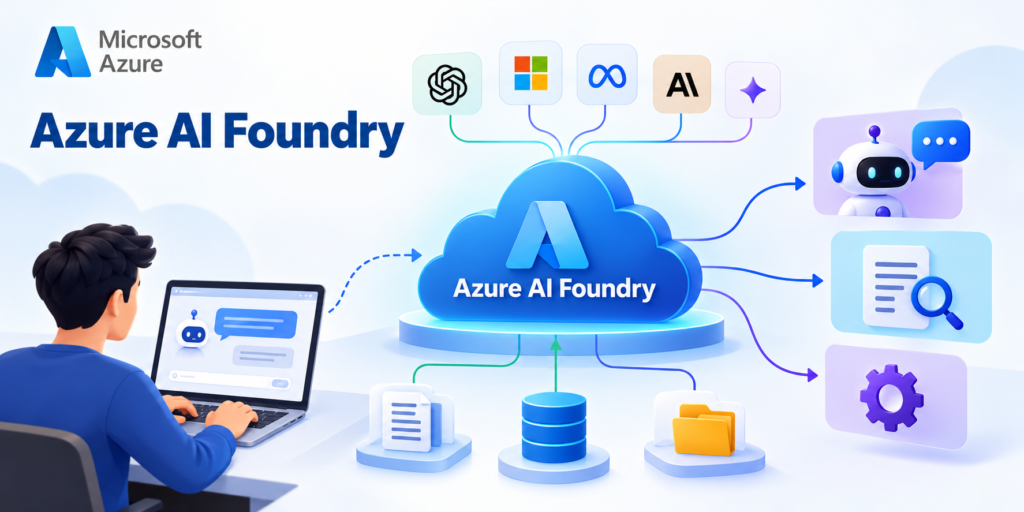
Artificial Intelligence applications may look simple from the outside. A user enters a prompt, uploads an image, asks a question, or submits some data—and within seconds, the application returns an intelligent response. For example: User → AI Application → AI Model → Response But behind this simple interaction is often a sophisticated cloud architecture involving …

Cloud Fundamentals: Cloud Architecture for AI Applications Read More »

Cloud Fundamentals: Choosing Between AWS, Azure, and Google Cloud

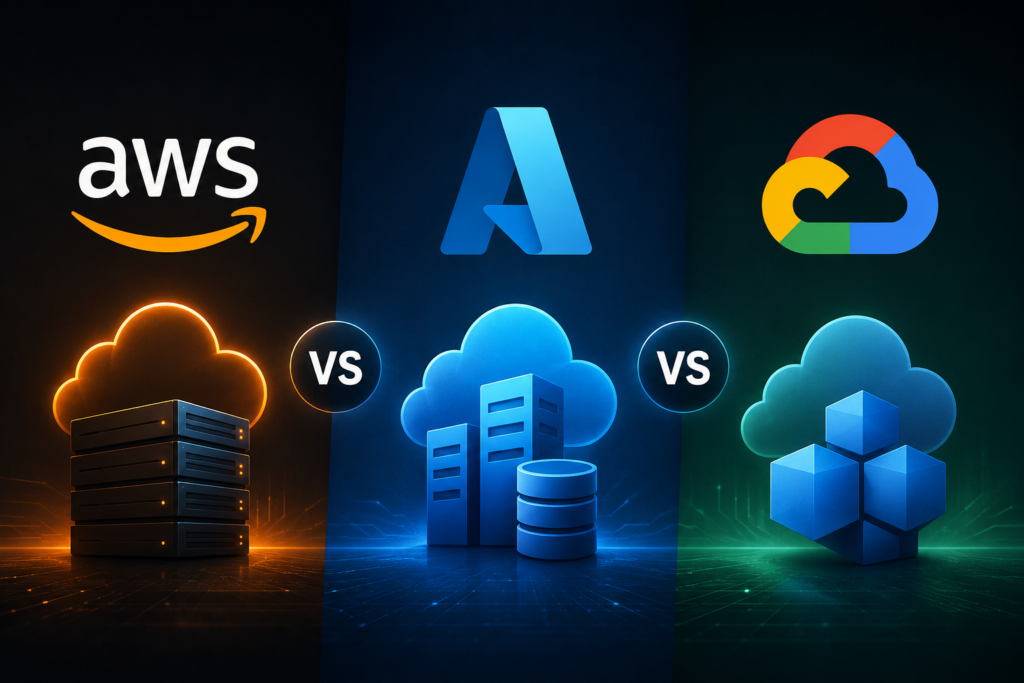
Cloud computing has become one of the foundations of modern software development, data engineering, DevOps, and artificial intelligence. When organizations build a new application today, they often do not purchase physical servers, install them in a data center, and maintain everything themselves. Instead, they rent computing resources from cloud providers. Three platforms dominate many enterprise …

Cloud Fundamentals: Choosing Between AWS, Azure, and Google Cloud Read More »

Cloud Fundamentals: Why AI Runs in the Cloud

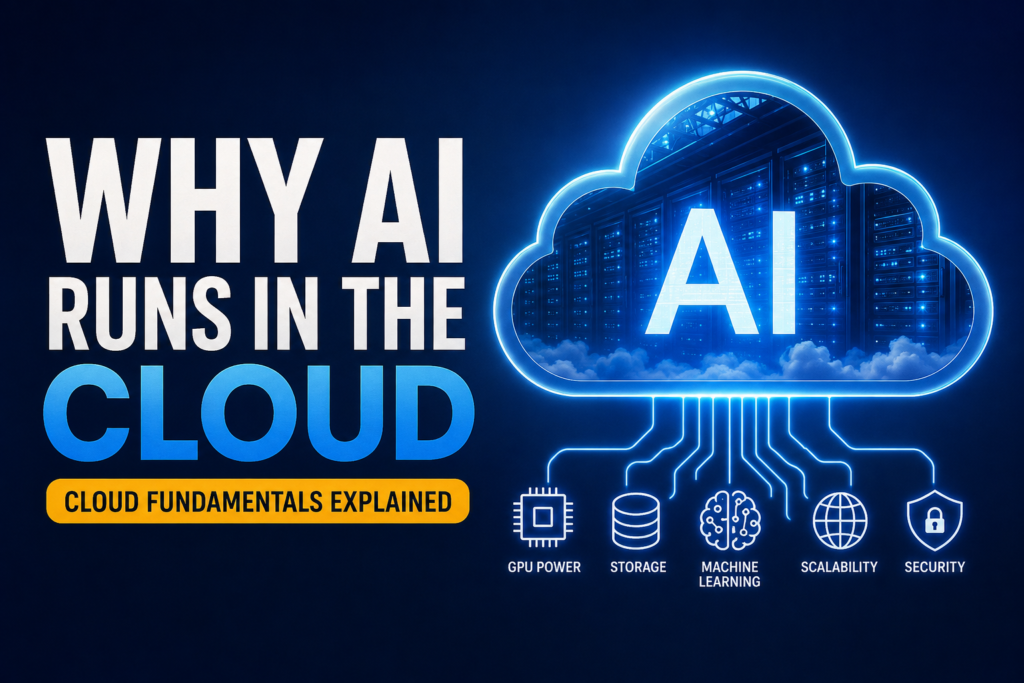
Artificial Intelligence is now used in chatbots, recommendation systems, fraud detection, image recognition, coding assistants, automation tools, and Large Language Models (LLMs). But when we use an AI application, an important question is often overlooked: Where does the AI actually run? Some AI models can run on laptops, mobile devices, or local servers. However, many …

Cloud Fundamentals: Why AI Runs in the Cloud Read More »

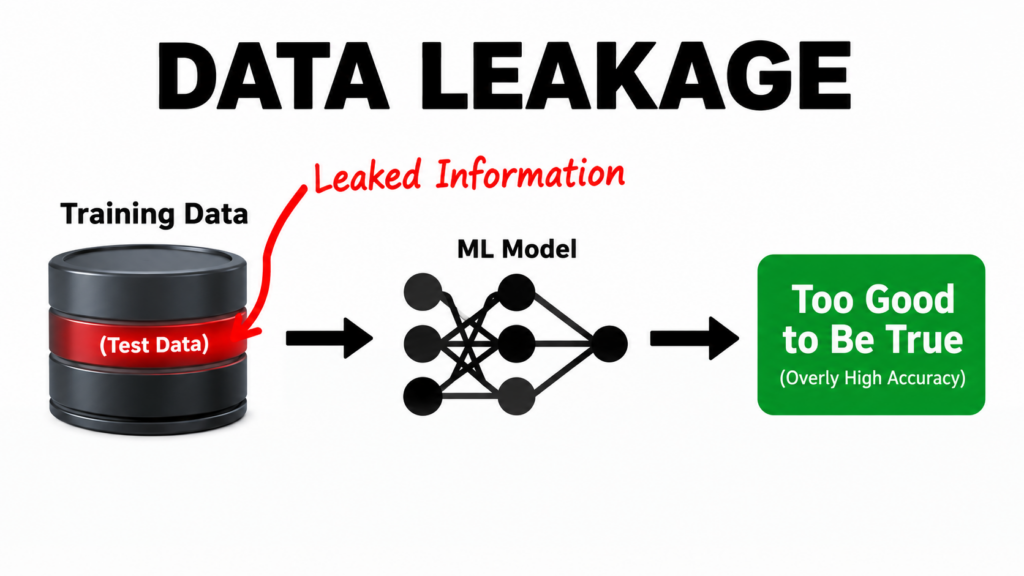
Data Leakage and How to Avoid It

Machine learning models are built to learn patterns from historical data and use those patterns to make predictions on new, unseen data. But sometimes a model performs exceptionally well during training and evaluation—and then performs poorly after deployment. One of the most common reasons for this unexpected behavior is data leakage. Data leakage occurs when …

Data Leakage and How to Avoid It Read More »

Machine Learning Fundamentals & Advanced ML

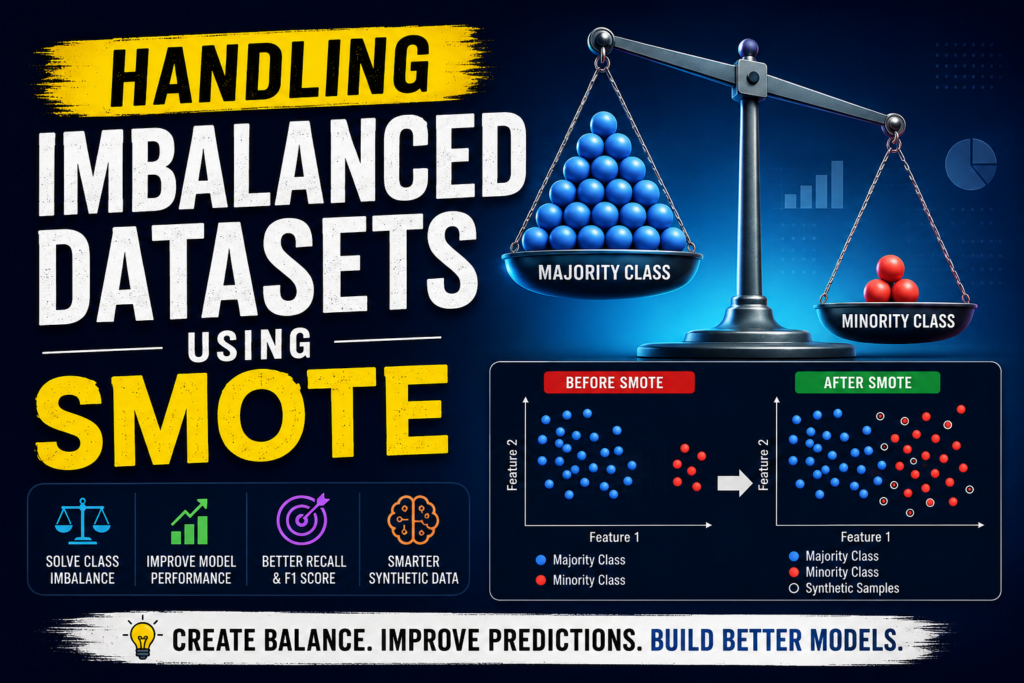
Handling Imbalanced Datasets using SMOTE Machine Learning models are only as good as the data they learn from. One of the most common challenges faced by data scientists is imbalanced datasets, where one class significantly outnumbers the other(s). This issue is especially common in fraud detection, medical diagnosis, anomaly detection, manufacturing defect detection, cybersecurity, and …

Machine Learning Fundamentals & Advanced ML Read More »

Machine Learning Fundamentals & Advanced Feature Selection Techniques

Machine Learning Fundamentals & Advanced Feature Selection Techniques Machine Learning Fundamentals & Advanced Feature Selection Techniques A Complete Guide for Building Better Machine Learning Models Machine Learning (ML) has become one of the most influential technologies in modern software development. From recommendation systems and fraud detection to autonomous vehicles and Generative AI, machine learning powers …

Machine Learning Fundamentals & Advanced Feature Selection Techniques Read More »

Machine Learning Fundamentals & Advanced ML Feature Engineering

Machine Learning (ML) has become one of the most valuable technologies in today’s software industry. From recommendation systems and fraud detection to self-driving cars and generative AI, ML is transforming the way businesses operate. However, many beginners jump directly into training models using libraries like Scikit-learn without understanding the core concepts. Similarly, many experienced professionals …

Machine Learning Fundamentals & Advanced ML Feature Engineering Read More »

AutoML and Pipelines: DVC (Data Version Control) for Datasets and Machine Learning Models

Introduction Building a Machine Learning model is not just about writing code. A typical ML project involves: Collecting datasets Cleaning and transforming data Training models Evaluating results Experimenting with different configurations Deploying models One of the biggest challenges in Machine Learning projects is tracking datasets and model versions. Imagine: Version 1 of your model gives …

AutoML and Pipelines: DVC (Data Version Control) for Datasets and Machine Learning Models Read More »

AutoML and Pipelines: MLflow for ML Lifecycle Management

AutoML has simplified the process of building machine learning models, but managing the complete machine learning lifecycle remains a significant challenge. Data scientists often struggle with experiment tracking, model versioning, reproducibility, collaboration, and deployment. This is where MLflow comes into the picture. MLflow is an open-source platform designed to manage the entire machine learning lifecycle—from …

AutoML and Pipelines: MLflow for ML Lifecycle Management Read More »

H2O.ai: Open-Source Machine Learning Platform with AutoML

Machine Learning is transforming industries across the world—from healthcare and finance to e-commerce and automation. But building high-quality ML models traditionally requires: Strong programming knowledge Understanding of algorithms Feature engineering skills Hyperparameter tuning expertise Significant experimentation time This is where H2O.ai becomes extremely powerful. H2O.ai provides an open-source machine learning platform that simplifies the entire …

H2O.ai: Open-Source Machine Learning Platform with AutoML Read More »